
The Way Bible Garden
Background:
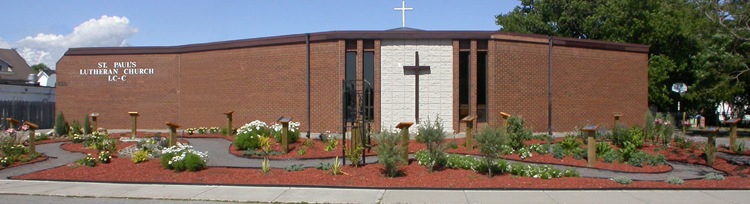
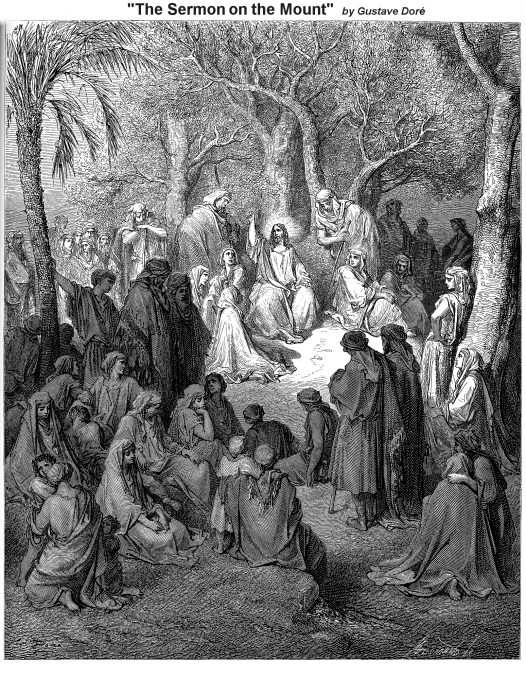
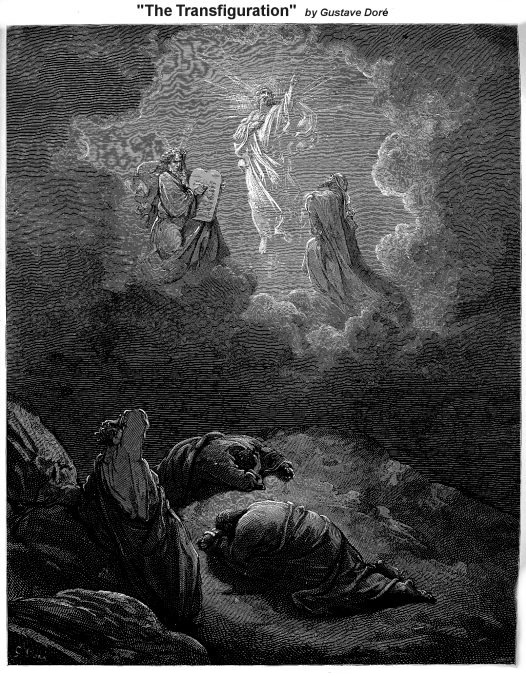
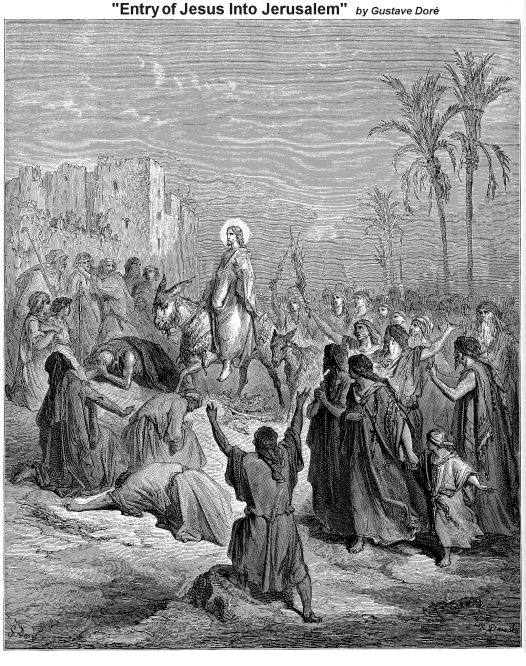
This Faith Walk is demonstrative of Jesus’ life of love and lessons in Christian living. There are fourteen stations beginning with his birth and ending with his Resurrection. Each stop has a biblical verse, a stone etching featuring a Doré Bible Illustration and is surrounded by plants which have a biblical meaning (either it is mentioned in the Bible or it has a nomenclature relevance) to that particular moment in Christian history.
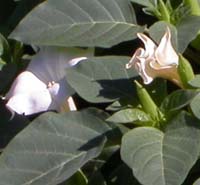
White Angel Trumpets ‘Datura’ “Brugmansai candida”
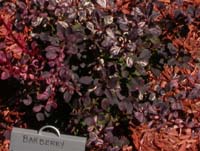
Barberry “Berberis thunbergii ” – represet thorns of crucifixion

Sage “Perovskia atriplicifolia” – Exodus 37:17
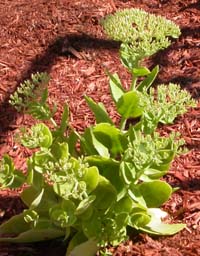
Sedum ‘Brilliant’ “Sedum spectabile” – represent aloes Proverbs 7:17
Not shown:
3 White Trumpet Lilies “Lilium regale” – represent Triune God
|
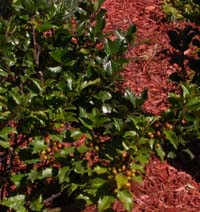 Magic Berry Holly “Illex Meserveae” – Popular Christmas Decoration 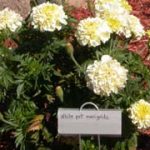 White Pot Marigolds “Calendula officinalis” – Isaiah 40:6 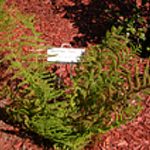 Christmas Fern “Polystichum acrostichoides” 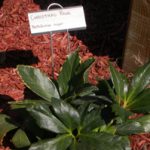 Christmas Rose “Helleborus niger” 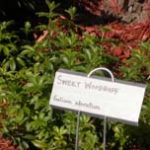 Sweet Woodruff “Galium odoratum” – Galium verum – bedstraw; laid in a manger Jesus may have been nestled among this plant 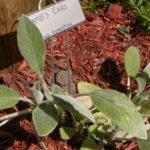 Lamb’s Ears “Stachys Byzantina”  Carpathian Harebell “CampanulaCarpatica”
|

Not shown:
White Lilies ‘Madonna Lily’ “Lilium Candidum” – 1 Kings 7:22
Spring Flowers:
White Crocus “Crocus vemas”
Snowdrops “Galanthus nivalis”
White Triumph Tulips “Tulipa”
White Daffodils “Narcissus”
Glory of the Snow “Chionodoxa” – white star shaped blooms
|
 Willows “Salix integra Hakuro Nishiki” – Isaiah 44:4 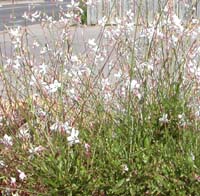 Whirling Butterflies “Gaura – Gaura lindheimeri ” – to represent the dove (Holy Spirit)  Goatsbeard “Aruncus dioicus” – to represent Reed/Papyrus (Ezekial 40)  Sweet Flag “Iris pallida” ‘Variegata’ – Isaiah 43:23 |
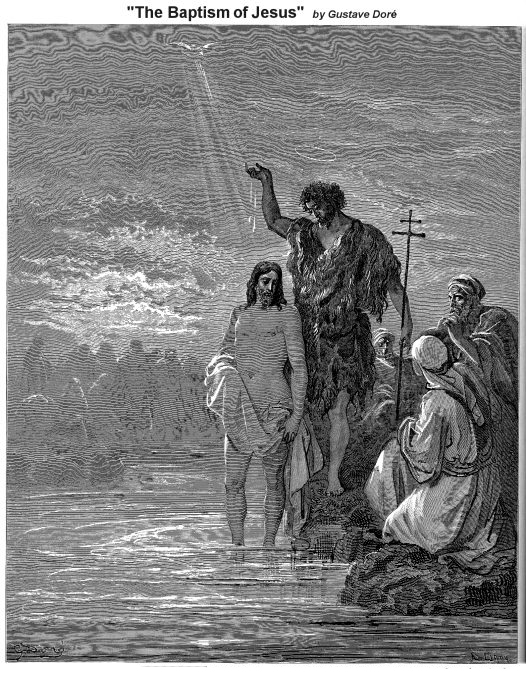 Matthew 3:13-17
Not shown:
Yellow Flag Iris “Iris pseudacorus” – 3 petalled to represent Trinity
|
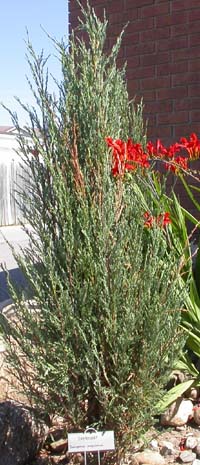 Skyrocket Juniper “Juniperus scopulorum” – in the Bible, the Juniper was actually a shrub called broom (Genista) – 1 Kings 14:5  Lucifer Crocosmia “Crocosmia – Lucifer” – represent Satan 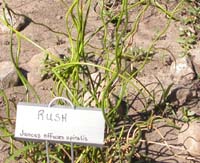 Rush “Juncus effuses spiralis” – Isaiah 35:7 (nicknamed “the herb of grace”)  Stone Crop “Sedum spurium ” – Tricolour |
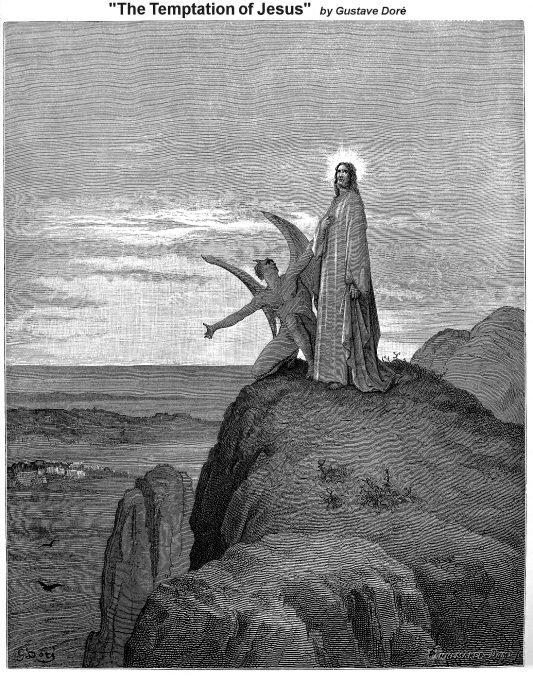
Spring Flowers:
Snow Crocus “Crocus vernas” – Solomon 4:13
|
|
Rush “Juncus effuses spiralis” – Isaiah 35:7 (nicknamed “the herb of grace”) 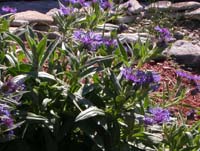 Bachelor Buttons “Centaruea Montana” – successful plant growing in hot regions of Palestine |
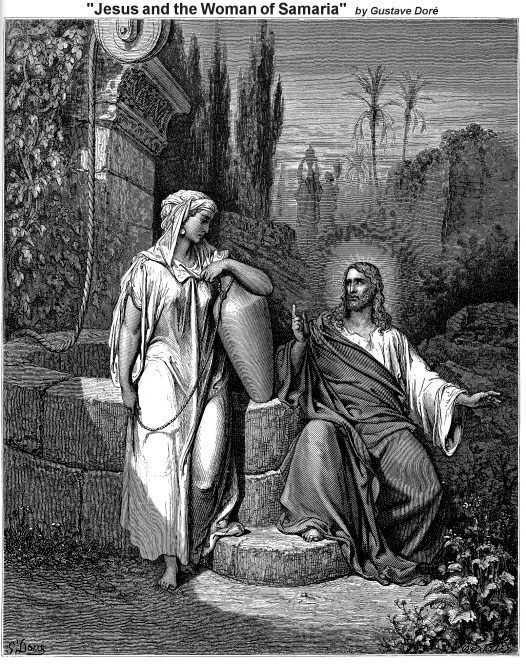
Not shown:
Yellow Flag Iris “Iris pseudacorus ” – Isaiah 43:23
|
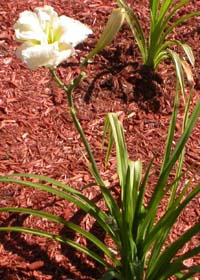 Day Lily ‘Stella D’Oro’ “Hermerocallis” – Proverbs 7:17 to represent Aloes 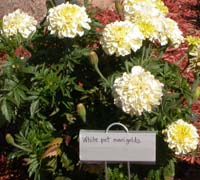 White Pot Marigold “Calundula officinalis” – representing Lilies of the field 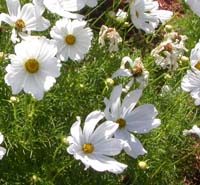 White Cosmos “Cosmos bipinnatus” – represent the earth |
Not shown:
Columbine “Aquilegia alpine ” – representing Lilies of the field
White Iris “Iris sibirica ” – representing Lilies of the field
Poppies ‘Double Pleasure’ “Papaver orientale ” – representing Lilies of the field
Aster ‘Monarch’ “Aster friartii ” – representing Lilies of the field
|
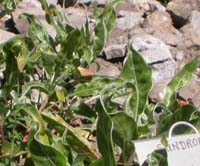 Sun Drops “Oenothera missouriensis ” – Mountainous region/Alpine Plants 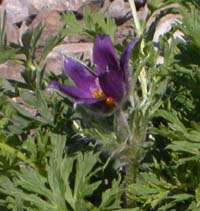 Anemone “Pulsatilla vulgaris ” – Mountainous region/Alpine Plants 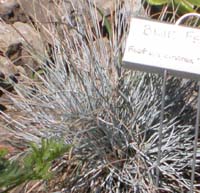 Blue Fescue ‘Elijah’s Blue’ “Festuca cinerea” – Mountainous region/Alpine Plants  Rock Rose “Heliathemum mutabile” – Mountainous region/Alpine Plants 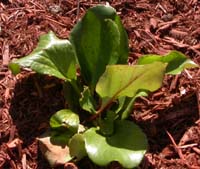 Bergenia “Bergenia cordifolia” – Mountainous region/Alpine Plants  Savlia ‘Marcus’ “Salvia nemerosa ” – Mountainous region/Alpine Plants  Bluebeard ‘Jason’ “Caryopteris incana” – Mountainous region/Alpine Plants |
Spring Flowers:
White Crocus “Crocus vernas”
|
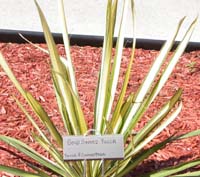 Golden Sword Yucca “Yucca filamentosa” – to represent palms 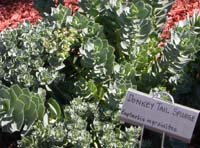 Donkey Tail Spurge “Euphorbia myrsinites” 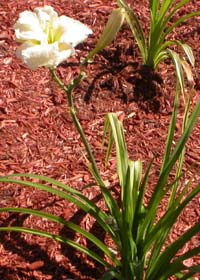 Day Lily ‘Gentle Shepherd’ “Hemerocallis” |
|
 Grapevine ‘De Chaunac’ “Vitus” – Wine of the Lord’s Supper 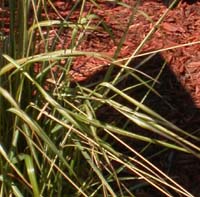 Feather Reed Grass ‘Avalanche’ “Calamagrostis acutiflora” – represent barely-bread of the Lord’s Supper |

Not shown:
Trumpet Vine “Campsis radicans”
|
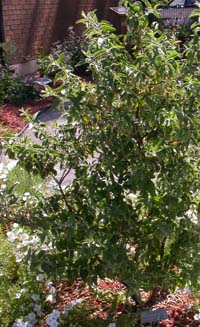 Russian Olive “Elaeagnus angustifolia ” – to represent olive trees of Gethsemane  Sea Buckthorn “Hippophae rhamnoides” – to represent olive trees of Gethsemane 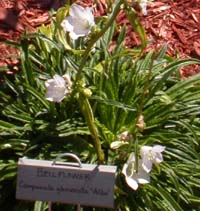 Clustered Bellflower ‘Alba’ “Campanula glomerata” – cup shaped flower 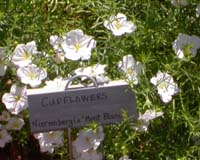 Neirembergia ‘Mont Blanc’ “Nierembergia scoparia ” – cup shaped flowers 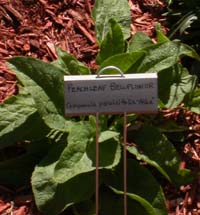 Peach Leaf Bellflower ‘Alba’ “Campanula persicifolia” – cup shaped flowers |
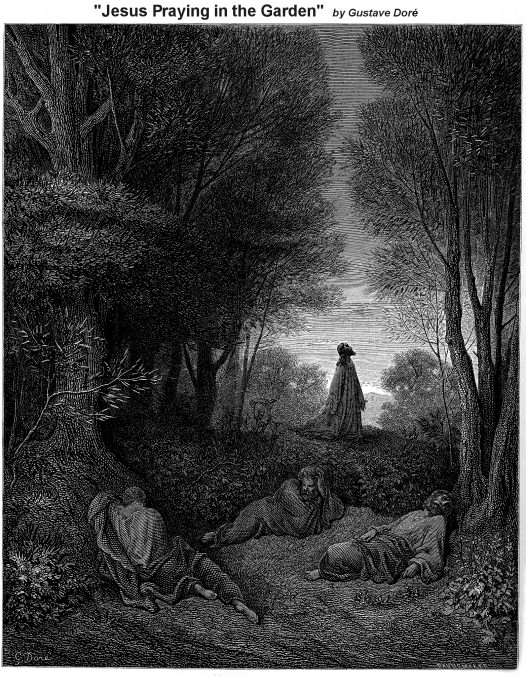
|
 Locust Tree “Gleditsia” – Christian lore says Judas hung himself from a locust tree after his betayal of his Lord  Silver Mount ‘Wormwood’ “Artemis schmidtiana” – all biblical references relate wromwood to bitterness  Garden Sorrel “Rumex Sanguineus” |
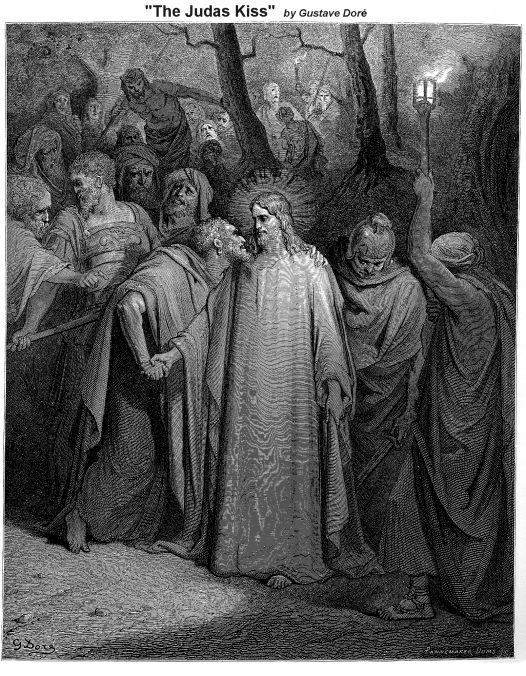 Mark 14:43-46
Not shown:
Forget-me-not ‘Victoria Blue’ “Myosotis sylvatica”
|
 Horseradish “Armoracia resticana” – various bitter herb to represent the bitterness of Peter’s Denial  Chives “Allium” – various bitter herb to represent the bitternesss of Peter’s Denial 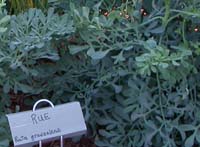 Rue “Ruta graveolens” – Luke 11: 42, 43 |
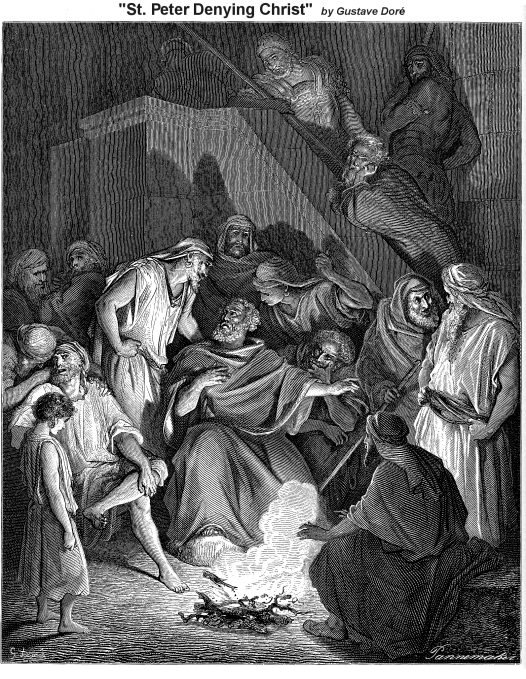 John 18:25-27
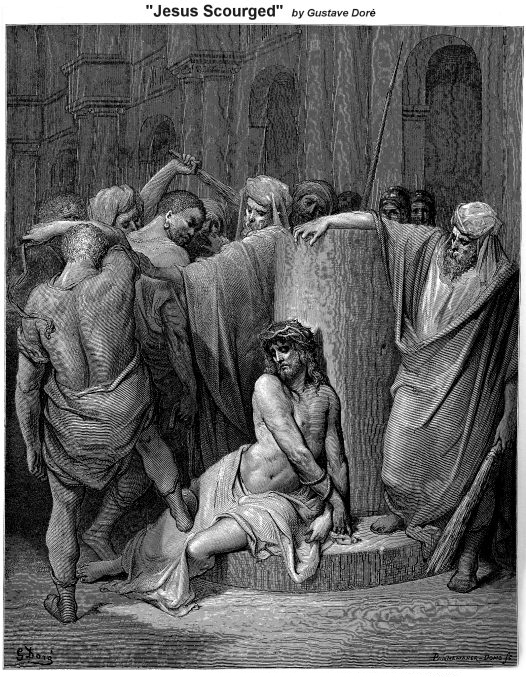 John 19:1-3 John 19:1-3
Then Pilate took Jesus and flogged him. And the soldiers twisted together a crown of thorns and put it on his head and arrayed him in a purple robe. They came up to him, saying, “Hail, King of the Jews!” and struck him with their hands. |
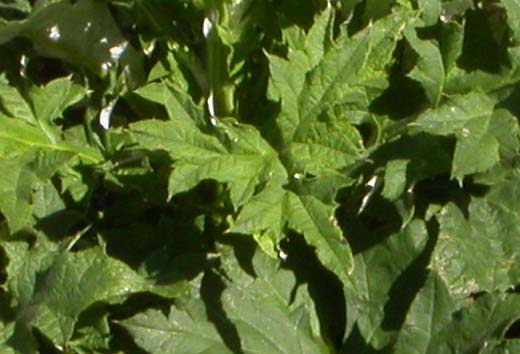 Thistles “Echinops ritro” – Job 31:40 to represent crown of thorns  Globe Thistle ‘Blue Globe’ “Echinops bannaticus” – Job 31:40 to represent crown of thorns 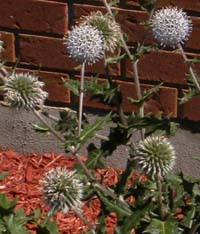 Great Globe Thistle ‘Arctic Glow’ “Echinops sphaerocephalus ” – Job 31:40 to represent crown of thorns 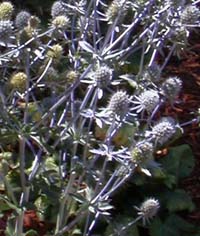 Sea Holly ‘Blue Ribbon’ “Eryngium planum” – Job 31:40 to represent crown of thorns 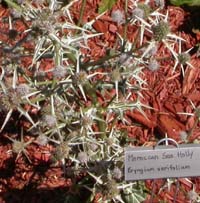 Moroccan Sea Holly “Eryngium planum” – Job 31:40 to represent crown of thorns 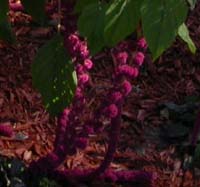 Love Lies Bleeding “Amaranthus caudatus” |
Not shown:
Cornflower “Centaurea” – Job 31:40 to represent crown of thorns
Spring Flowers:
Red Tulips “Tulipa” – called ‘Rose of Sharon’ in the Bible
|
 Magic Berry Holly “Ilex meserveae” – to represent thorns 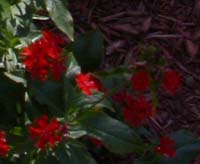 Cross of Jerusalem “Lychnis chalcedonica” 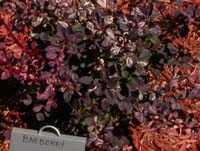 Barberry “Berberis thunbergii” – another thorny plant 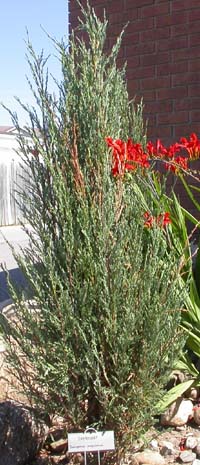 3 Skyrocket Juniper “Juniperus scopulorum” – to represent three crosses  Anise-Hyssop ‘Blue Fortune’ “Agastache feoniculum” – hyssop was used to raise a vinegar soaked sponge to Christ on the cross |
 Luke 23:33-42
|
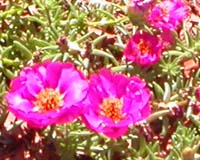 Portulaca “Portulaca grandiflora” – from same plant genus as labdanum – aloes used to prepare Christ’s body for burial  Whirling Butterflies “Gaura-Gaura lindheimeri” – to represent angel 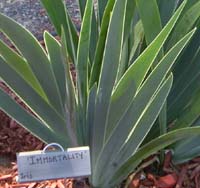 Iris ‘Immortality’ “Iris sibirica” – Reblooming  Coral Stonecrops ‘Murale’ “Sedum album”  White Carpet Roses “Roas ‘Noaschnee’ ” – everblooming to represent His constant Love |
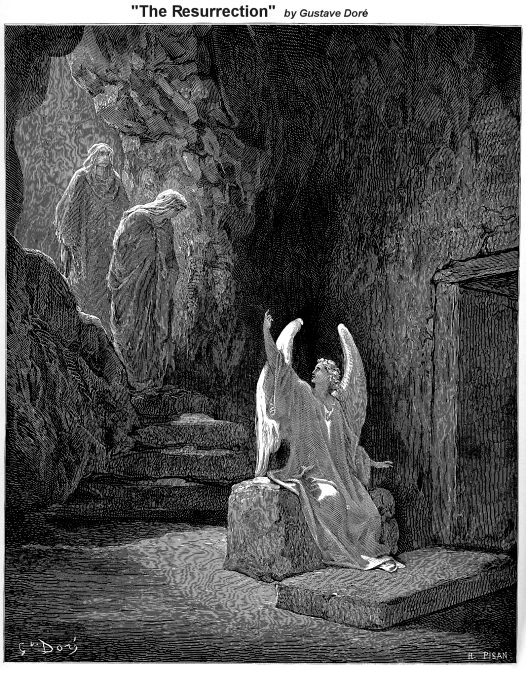 Matthew 28:1-5
Not shown:
White Lilies “Lilium candidum” – to represent joy of Easter ‘He has risen’
Spring Flowers:
Saffron Crocus “Crocus sativus” – Song of Solomon 4:14
White Daffodils“Narcissus”
Snowdrops “Galanthus nivalis”
White Crocus “Crocus vemus”
History:
After substantial planning and research by Rev. Dr. Kevin Fast and Gayle Leney in 2006, the garden project began in the spring of 2007. Volunteers from the church completed the project after several months of work.
We wish to give special thanks to the following for their assistance with our project:
- Faith Life Financial
- The former Lutheran Church–Canada East District Department for Outreach
- Connon’s Nurseries (Trenton, ON)
- Vesey’s Bulbs, (Charlottetown, PEI)
- Lorne Park Nursery (Colborne, ON)
- Bill & Patricia Branning (Cobourg, ON)
- Murray Davey (Cobourg, ON)
- Lorraine Heber (Desboro, ON)